Tishra Alaripu: Episode 2
Repertoire
•
14m
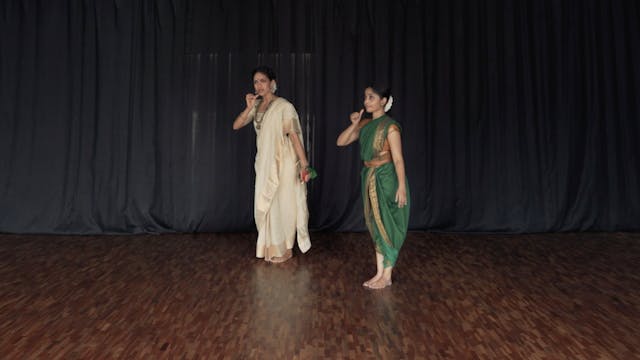
The Alaripu is the very first piece taught to a student of Bharatanatyam and is also the traditional opening to a performance. The word Alaripu means “to blossom,” symbolizing the gradual opening of the body and mind — like a flower — to the dance.
The Tishra Alaripu is based on tishra (three-beat) patterns, and the sollukattu is most often recited in Rūpaka tāla. It begins with simple rhythmic phrases and expands into progressively complex patterns, embodying the idea of unfolding.
Physically, the Tishra Alaripu trains isolations of the head, neck, shoulders, arms, and torso, demanding precision, control, and perfect alignment. Each body part must move distinctly while remaining in coordination with the tala. Though it seems simple on the surface, it is in fact difficult because of the intense control and stamina required.
Thus, the Tishra Alaripu serves two purposes: pedagogically, it is the dancer’s first lesson in rhythm, concentration, and body control; symbolically, it represents the “blossoming” of both dancer and performance — a pure, rhythmic invocation before the more expressive pieces unfold.
Up Next in Repertoire
-
Swaraguccha: Episode 2
A Swaraguccha
An invocatory composition that is a combination of Swaras and short Jathis, with verses that are in Praise of Lord Ganesha and Goddess Saraswati.
(Production: Shankarabharanam)
Ragamalika
Tala: Adi
Language: SanskritChoreographed and performed by:
Rukmini VijayakumarVIDEO CR...
-
Ananda Natanam: Episode 2
Ananda Natanam
Ragam: Hamsanandi
Adi Talam
Composer: Thara Natarajan
Language: TamilAnanda Natanam, is a song that describes a dancing peacock. The Bhakta sees the peacock dancing and asks what the reason is for this joyous dance. Do you dance because you saw lord Muruga? Because the Deer eye...
-
Varnam, "Adi Shivane" : Part 2
Varnam, "Adi Shivane"
Raga: Todi
Adi Tala
Composer: K.N.Dandayudapani Pillai.
Choreography: Guru Narmada (Jathis) , Adapted by Rukmini Vijayakumar
Language: TamilThe Varnam speaks from the perspective of a Nayika that is longing to see Lord Shiva.
This introduction will go through the meaning...